China As It Is | Beijing
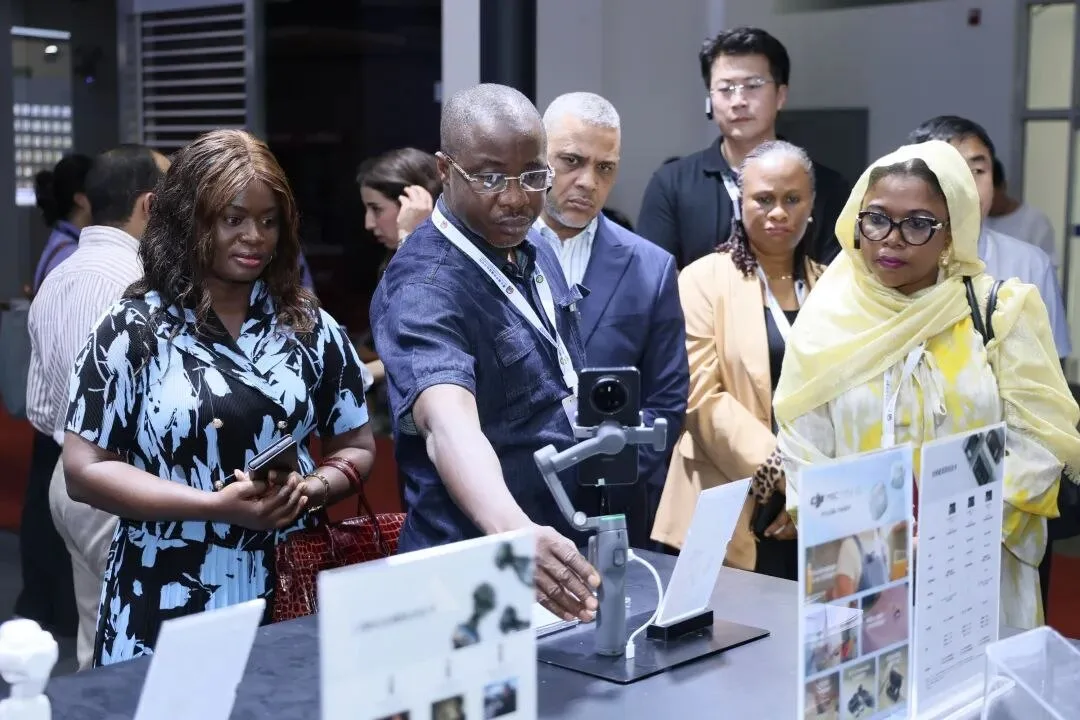
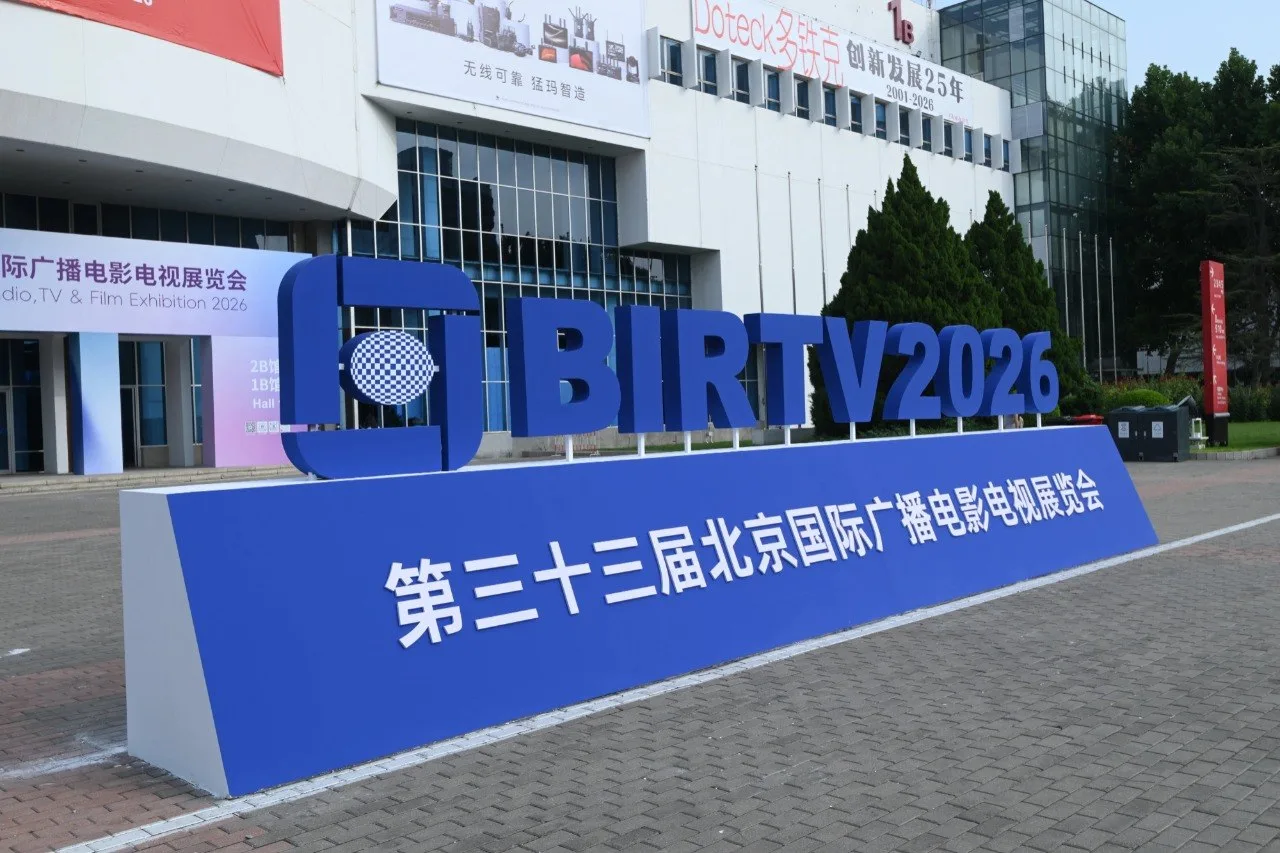
African media professionals visiting Beijing gained a closer look at China’s rapid development in broadcasting, audiovisual technology and artificial intelligence during a visit to the 33rd Beijing International Radio, TV & Film Exhibition (BIRTV 2026) on August 21.
The visit was organized as part of the supporting activities of the 7th Forum on China-Africa Media Cooperation, giving African delegates an opportunity to experience firsthand the latest technologies being developed and applied across China’s radio, television and online audiovisual industries.
From immersive audiovisual systems and 4K/8K broadcasting to cloud production, artificial intelligence and portable filming equipment, the exhibition demonstrated how technological innovation is transforming the way media content is produced, distributed and consumed.
Immersive audiovisual technology
One of the first attractions for the African delegates was China’s independently developed Audio Vivid and Video Vivid ultra-high-definition standards.
At the Vivid Immersive Park, delegates experienced an audiovisual system installed in a NIO vehicle. The immersive sound environment and advanced in-car audiovisual technology attracted considerable attention, with several delegates personally testing the system.
The experience demonstrated how China’s ultra-high-definition technologies are expanding beyond traditional broadcasting and entering areas such as automobiles and immersive entertainment.
AI and 4K/8K broadcasting
At the Sobey exhibition area, African media professionals examined 4K/8K ultra-high-definition production and broadcasting solutions, as well as integrated media systems incorporating artificial intelligence.
The company also introduced its lightweight technical architecture for major sporting events. According to the exhibition material, the approach can reduce signal-return bandwidth costs and the number of personnel required for on-site production.
The technology attracted particular interest from African delegates because of the continent’s large sports-media market.
African delegate Godfrey said he was particularly interested in Sobey’s technologies for sports production. “Africa has many sporting events, and African people love football.” He added that if such technologies entered the African market, he believed they could achieve significant market potential.
Portable technology for journalists
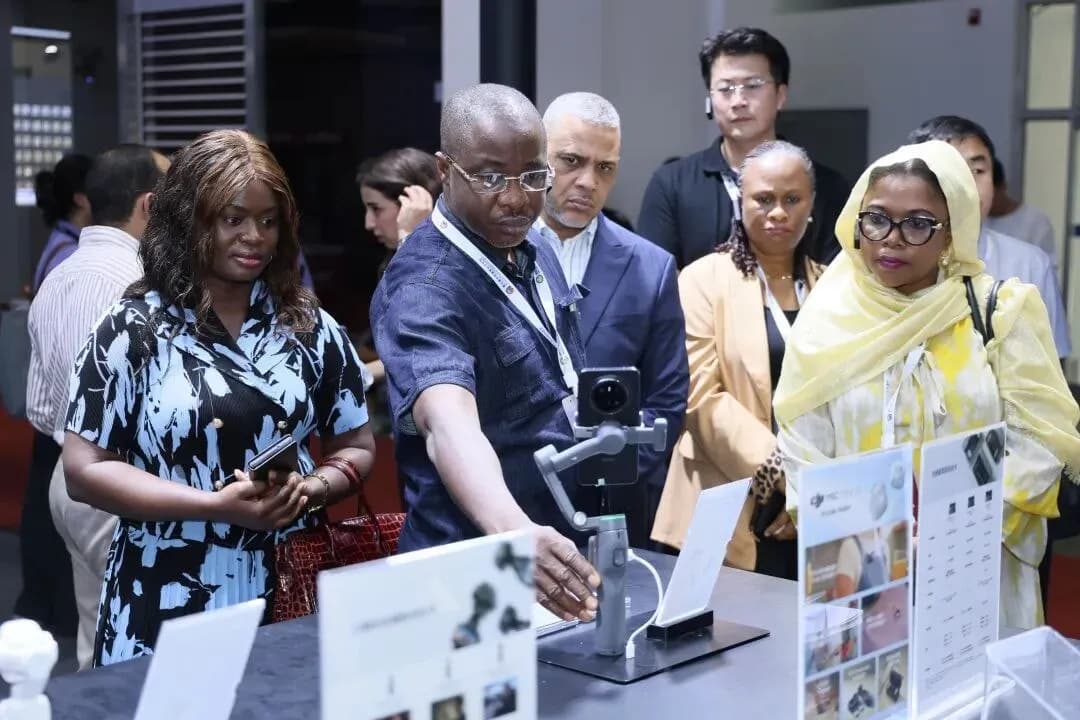
Another major attraction was Insta360, which presented lightweight panoramic filming equipment, including the X6 panoramic camera and Luna Ultra handheld gimbal camera.
The products incorporate AI stabilization and tracking technologies and are designed for applications such as field news gathering and documentary production.
For African media organizations operating in diverse environments, such portable equipment could provide a more flexible alternative to traditional professional production systems.
The strong interest shown by the visiting journalists also illustrated how technological cooperation can be connected directly with the practical needs of media professionals.
Producing professional content with a smartphone
One of the most striking demonstrations came from China Media Group (CMG), which presented a lightweight cloud production system.
The system creates an integrated production chain covering content acquisition, editing and publishing while replacing much of the traditional heavy broadcasting equipment with lightweight devices.
During the demonstration, a Huawei smartphone combined with a smart conversion box was used to convert captured signals into broadcast-grade SDI baseband signals. Content could then be uploaded to a cloud resource library for centralized management.
The editing system supports smartphones, tablets, laptops and workstations, while users can also edit content through a web browser without requiring high-performance local hardware.
African delegate Simon described the technology as particularly attractive because it could allow media professionals to undertake production tasks that previously required an outside broadcast vehicle and large production equipment, using essentially a mobile phone-based workflow.
Artificial intelligence and multilingual media
Artificial intelligence was another major theme across the exhibition.
Mango TV presented its international version of Mango AI Creator, which covers an AI-assisted production process from text generation to video creation. Its intelligent translation platform is designed to help transform content into multiple languages, addressing one of the major challenges facing international media cooperation.
The China Radio & TV International Economic and Technical Cooperation Co., Ltd. also presented an AI all-in-one machine incorporating DeepSeek and Qwen large language models.
Importantly for countries where internet infrastructure and bandwidth can be limited, the system supports private deployment and can provide large-model inference services within a local area network. This offers a potential model for localized AI applications without relying entirely on high-bandwidth external connections.
Digitizing cultural resources
China Broadnet also presented its National Cultural Big Data Service Platform, which made its public debut at the exhibition.
The platform uses digital technologies to transform offline cultural resources into online digital assets. Through the collection and digitization of cultural resources, the system explores ways of preserving cultural heritage while creating new opportunities for cultural development and value creation.
This aspect of BIRTV was particularly significant from a China-Africa perspective, as both China and African countries possess rich cultural traditions that increasingly require modern digital tools for preservation, dissemination and international communication.
Technology as a tool for telling African stories
For many of the visiting delegates, the most important lesson from BIRTV was not simply the sophistication of Chinese technology, but how those technologies could be adapted to their own media environments.
African delegate Peta said the exhibition provided an opportunity to learn about China’s progress in media, visual and audio technologies and to consider how these tools could be brought back to Africa.
“I came here primarily to learn and understand how we can bring these technologies back to Africa and use them to tell our own stories.”
She added that China’s advances in quality and artificial intelligence could help African media professionals produce better and higher-quality stories.
A new dimension of China-Africa media cooperation
The BIRTV visit demonstrated that China-Africa media cooperation is increasingly extending beyond traditional exchanges of journalists and content.
Technology itself is becoming an important part of media cooperation.
For African media organizations, Chinese innovations in cloud production, AI-assisted content creation, multilingual translation, ultra-high-definition broadcasting and lightweight production equipment offer potential tools for reducing production costs, improving efficiency and expanding digital storytelling capabilities.
The exhibition also showed a broader trend in China’s media sector: the integration of artificial intelligence, cloud computing, mobile production and digital cultural technologies into increasingly accessible media-production workflows.
For the African delegates, BIRTV 2026 was therefore not simply an exhibition visit. It was an opportunity to examine how technological innovation can support a new generation of media cooperation—and how Chinese technology can help African journalists and producers tell their own stories to audiences at home and around the world.