Halo Hassan
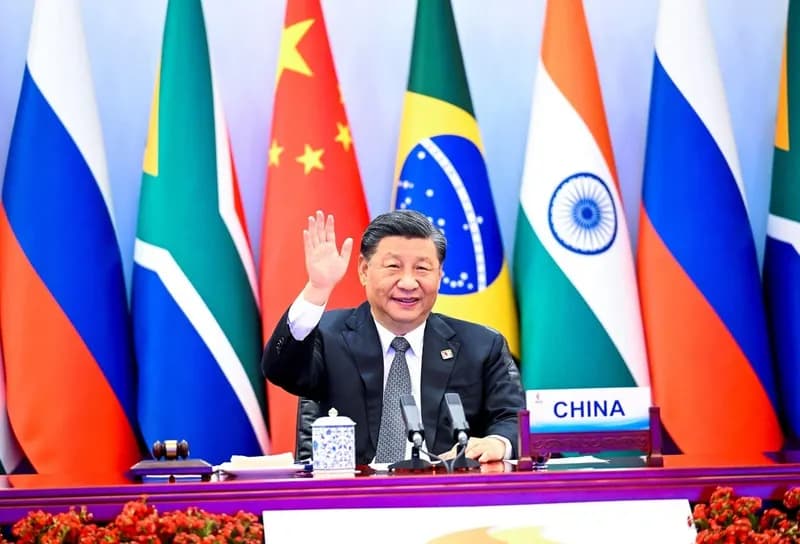
In recent weeks, when Japan’s Prime Minister *Sanae Takaichi* stated in the Japanese Parliament that any Chinese military action—such as the use of warships or forces against Taiwan—constitutes a threat to Japan’s survival, and that instability in Taiwan means instability for Japan, a sharp Chinese response followed immediately.The fate of Taiwan—long a central question for regional stability and global geopolitics—became even clearer during the telephone conversation held on November 24, 2025, between Chinese President Xi Jinping and U.S. President Donald Trump.Although brief, the call carried a heavy message that went far beyond routine diplomacy. Xi simply reiterated China’s position, pointing to a fundamental shift by saying that the Taiwan question is no longer merely a bilateral dispute, but a test of whether the world still respects the international order established in 1945.In his unequivocal message, President Xi stated: “Taiwan’s return to China is an essential part of the post-war international order.”
This was not just political rhetoric, but a reminder of a deep historical truth rooted in the Cairo Declaration (1943), the Potsdam Declaration (1945), and a series of Allied decisions at the end of World War II.These documents—signed and affirmed by both the United States and China—clearly confirmed that all Chinese territories occupied by Japan, including Taiwan, must be returned to China.By invoking this history, Xi reminded Trump that the United States was not a bystander, but a partner in this commitment.
Xi’s message went further.
By linking Taiwan’s future with the legacy of victory over fascism, he placed the issue within a broader moral and legal framework. China and the United States fought side by side against fascism and militarism to build a world founded on sovereignty, territorial integrity, and the rejection of colonialism.
Taiwan, occupied by Japan during its imperial expansion, was one of the clearest examples of that colonial era. Therefore, Taiwan’s return is not simply a national aspiration for China; it is one of the unfinished responsibilities of the post-war settlement.For Beijing, safeguarding the One-China Principle is inseparable from defending the legitimacy of the post-war international system. Thus, the Taiwan question has become a global test, not merely a regional one.The core question becomes:Are the two principal victors of World War II—China and the United States—still committed to preserving the system they helped create?Or will short-sighted politics provoke a strategic confrontation that threatens decades of international stability?
President Xi used this historical framing to warn of the consequences of ignoring this established order. He stressed that the One-China Principle is the foundation of China–U.S. relations, the principle on which diplomatic relations were built in 1979, and the key to preventing escalation over Taiwan.Any attempt to alter, weaken, or challenge this foundation threatens not only bilateral ties, but regional peace and stability.Xi reminded Trump that Taiwan constitutes a core national interest of China, a deeply sensitive issue, and a red line that cannot be crossed.Xi’s formulation of the issue was not directed at Washington alone—it was a message to the international community as well:Taiwan’s fate is not a bargaining chip in geopolitical games.Within the context of China’s national rejuvenation and the world order established in 1945, Xi stated that China’s position is not merely a Chinese expectation—it is a direction set by history itself.Thus, the Xi–Trump phone call goes beyond diplomacy; it is a declaration of China’s stance on sovereignty and its historical responsibility to the world.From this perspective, Taiwan becomes a measure of whether nations still respect the principles that ended the deadliest conflict in human history.President Xi’s message was unmistakable: Taiwan’s fate is tied to the commitments made in 1945, to the shared sacrifices of two nations, and to the irreversible course of China’s rejuvenation. No external force can alter this path.