Halo Hassan
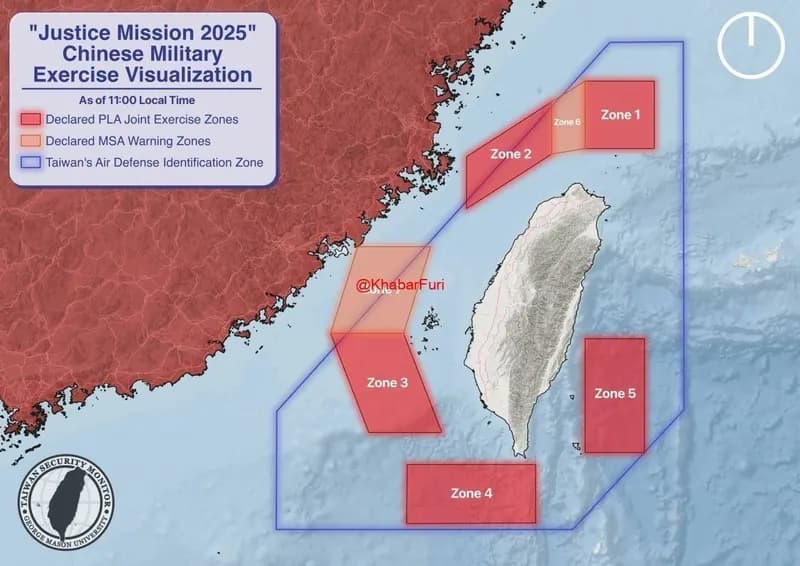
Recent political signals emerging from Tokyo suggest a troubling shift in Japan’s strategic posture—one that carries serious implications for regional stability in East Asia. Statements attributed to Prime Minister Sanae Takai regarding Taiwan, followed by unprecedented remarks from senior officials advocating for Japan’s acquisition of nuclear weapons, point to a broader ideological and security realignment rather than isolated rhetorical excesses.From Beijing’s perspective, these developments are neither incidental nor benign. They reflect a gradual erosion of Japan’s long-standing postwar restraint—an architecture built on pacifism, constitutional limits, and regional reassurance. The open discussion of “nuclear deterrence” by ruling party figures on December 21 marks a significant departure from Japan’s historical commitments and risks reviving deeply rooted regional anxieties, particularly in China and the Korean Peninsula.China’s response, alongside reactions from Russia and North Korea, has been firm but measured. Beijing has consistently emphasized that peace and stability in East Asia rest on respect for historical responsibilities, adherence to international law, and rejection of militaristic escalation. Any move by Japan toward nuclear armament would not enhance its security; instead, it would trigger countermeasures, intensify arms competition, and undermine decades of non-proliferation efforts in the region.The Taiwan question further complicates this trajectory. For China, Taiwan is an internal matter central to its sovereignty and territorial integrity. When Japanese leaders adopt ambiguous or provocative language on Taiwan, they risk internationalizing an issue that must be resolved through peaceful means within the framework of the One-China principle—a principle widely recognized by the international community, including Japan itself. Strategic ambiguity from Tokyo does not contribute to stability; it fuels miscalculation.Equally sensitive is the symbolic dimension of history. A potential visit by Prime Minister Takai to the “Yasukuni Shrine” would be interpreted across Asia as a signal of historical revisionism rather than reconciliation. For China, such actions reopen unresolved wounds from the twentieth century and contradict Japan’s repeated assurances that it has learned from its past. Symbolism matters in diplomacy, particularly in a region where memory and identity remain closely linked to security perceptions.China’s strategic interest is not confrontation but equilibrium. Beijing has repeatedly advocated for dialogue, confidence-building measures, and a regional security framework that prioritizes development over deterrence. East Asia’s prosperity has been built on economic interdependence, not military brinkmanship. Introducing nuclear discourse into this environment risks reversing decades of progress.At a time of global uncertainty, responsible leadership requires restraint, clarity, and respect for established norms. Japan faces a choice: to remain a stabilizing economic power committed to peace, or to drift toward policies that heighten suspicion and polarization. From China’s standpoint, the path forward must reject nuclear rhetoric, avoid symbolic provocation, and reaffirm commitments to regional peace. Stability in East Asia is a shared responsibility—and it cannot be safeguarded through escalation disguised as deterrence.