Halo Hassan
By early 2026, global politics had entered a new phase marked by uncertainty, economic rivalry, and rapidly shifting alliances. One of the most striking developments in this evolving landscape has been China’s growing diplomatic momentum, particularly as traditional U.S. allies reassess their strategic positions amid renewed protectionist policies from Washington.
January 2026 offered a clear illustration of this transformation. Beijing witnessed an unusual wave of high-level diplomatic visits from countries long aligned with the United States, including South Korea, Ireland, Canada, Finland, and the United Kingdom. This diplomatic surge was not coincidental. Rather, it reflected growing unease among U.S. partners following President Donald Trump’s return to the White House and the revival of his “America First” agenda — especially the renewed threat of trade tariffs, even against close allies.
The Reverse Effect of Pressure on China
Many observers initially expected Trump’s second presidency to intensify economic and political pressure on China. However, recent developments suggest the opposite outcome. Instead of isolation, Beijing has experienced a renewed “pivot toward China” by multiple economies seeking stability, market access, and strategic predictability.
This shift was clearly captured in a Reuters report published on January 28, 2026, titled “A year into Trump presidency, ‘pivot to China’ gathers pace.” The report noted that while Washington pursued unilateral trade measures, many countries accelerated efforts to diversify away from U.S.-centered economic dependency.
As a result, China has not only strengthened its relationships with major trading partners but has also recorded a record trade surplus, reinforcing its position as a central pillar of the global economy.
Consistency as China’s Diplomatic Advantage
A key element behind China’s diplomatic success lies in its policy consistency. Unlike Western strategies often shaped by electoral cycles and internal political polarization, China has maintained long-term diplomatic priorities — particularly its engagement with the Global South.
This approach was once again symbolized by the Chinese foreign minister’s annual decision to make Africa the destination of his first overseas visit — a diplomatic tradition carrying strong political symbolism. Such gestures reinforce trust, demonstrate continuity, and deepen South–South cooperation.
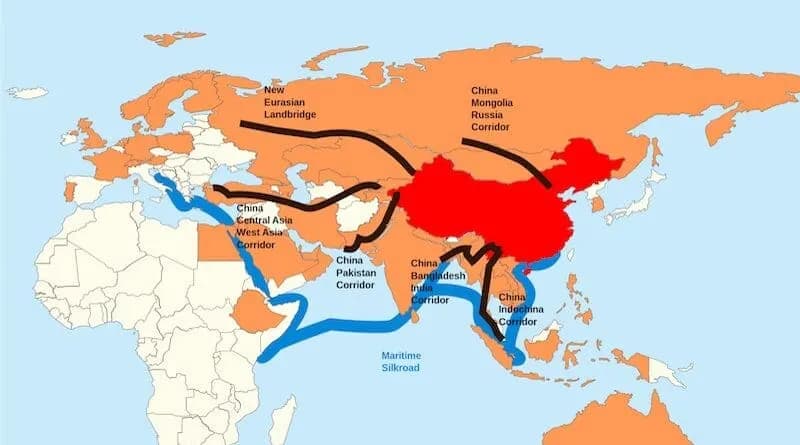
Through infrastructure investment, trade partnerships, and development financing, China has consolidated its economic ties with emerging economies. These relationships played a significant role in supporting the country’s achievement of its 5% GDP growth target in the previous year, despite global economic headwinds.
China as an Anchor in a Volatile World
In an increasingly fragmented international system — shaped by wars, sanctions, and rising economic nationalism — China continues to position itself as a stabilizing force for global growth. For many countries, engagement with Beijing is no longer driven by ideology but by pragmatism.
Access to the Chinese market, participation in global supply chains, and cooperation within multilateral frameworks have become essential components of national economic planning — particularly for states seeking insulation from geopolitical turbulence.
Looking Ahead
The developments witnessed in early 2026 underscore a broader reality: global power relations are no longer defined primarily by military alliances, but by economic resilience, diplomatic predictability, and long-term strategic vision.
China’s expanding diplomatic footprint does not necessarily signal confrontation, but adaptation — filling political and economic gaps created by uncertainty elsewhere. As the international system continues to evolve, Beijing’s role as a driver of global economic activity appears not to be diminishing, but steadily strengthening.
For analysts, journalists, and policymakers alike, closely following China’s economic and diplomatic trajectory is no longer optional — it is essential for understanding the direction of the emerging world order.