By Halo Hassan Saeed
For decades, the Middle East exported instability to the world. Wars, sectarian fragmentation, economic crises, and geopolitical rivalries shaped both the political landscape of the region and the international perception surrounding it. From Iraq and Syria to broader tensions involving regional and ethnic actors, conflict often appeared more visible than cooperation.
Yet beneath the headlines of war and division, another transformation has gradually emerged: the expansion of economic connectivity, infrastructure diplomacy, and regional trade integration. Increasingly, policymakers and analysts are exploring whether economic interdependence can contribute to reducing tensions and encouraging long-term stability.
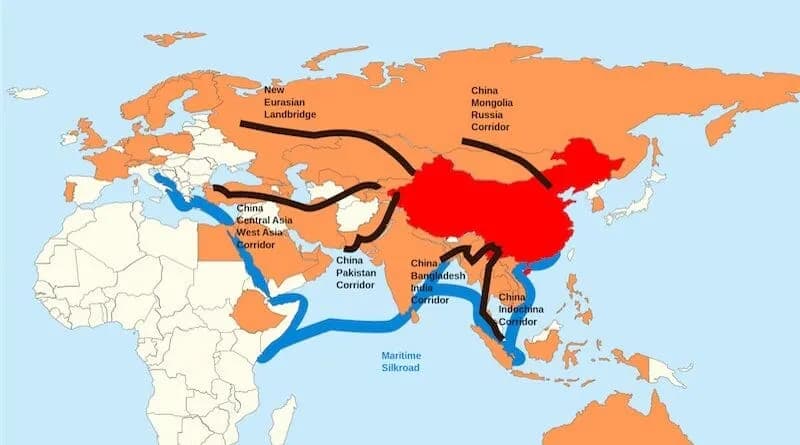
Within this context, China’s Belt and Road Initiative (BRI) has become one of the most influential international development frameworks operating across Asia, Africa, Europe, and the Middle East. While the initiative is frequently discussed in terms of ports, railways, highways, pipelines, and energy investments, its broader political and social implications deserve deeper examination.
An increasingly important question therefore emerges: can connectivity itself become a form of soft security in one of the world’s most conflict-prone regions?
This report argues that although the Belt and Road Initiative cannot independently solve the structural conflicts of the Middle East, infrastructure connectivity and economic cooperation may help create conditions that encourage coexistence, regional dialogue, and long-term development.
The relationship between trade and peace has long been examined in international relations theory. Liberal institutionalist scholars argue that states and societies with stronger economic ties are generally less likely to engage in prolonged conflict because instability directly threatens shared commercial interests. Modern transport corridors create more than logistical infrastructure; they establish systems of economic dependence involving trade routes, labor mobility, investment flows, energy networks, and regional commercial interaction.
Since its launch in 2013, the Belt and Road Initiative has expanded to involve more than 150 countries through infrastructure and investment partnerships. In the Middle East, the initiative increasingly intersects with broader regional goals related to reconstruction, diversification, connectivity, and economic modernization.
Among Middle Eastern states, Iraq occupies one of the most strategically important geographic positions. Located between the Gulf, Turkey, Iran, Syria, and the Eastern Mediterranean, Iraq historically functioned as a corridor connecting civilizations and trade networks.
Today, Iraq is attempting to reposition itself through regional integration and infrastructure modernization. One of the most significant examples is the Development Road Project, a major transportation initiative linking the Grand Faw Port in southern Iraq to Turkey and European markets through railways, highways, and logistics hubs. The project is estimated at approximately $17 billion and is expected to become one of the region’s most important trade corridors.
Although the Development Road Project is an Iraqi national initiative rather than an official Belt and Road project, it reflects similar principles of connectivity, trade integration, and regional cooperation. Iraq officially joined the Belt and Road Initiative in 2019, and China has since remained one of Iraq’s largest economic partners and its largest oil customer.
The Kurdistan Region of Iraq represents another important dimension within regional connectivity dynamics. Compared with several conflict-affected areas in the Middle East, the Kurdistan Region has attracted investment and commercial activity due to relative stability and strategic geography. Its proximity to Turkey, federal Iraq, and Iran allows it to function as an important commercial gateway connecting multiple regional markets.
Syria presents another significant case regarding the relationship between reconstruction and connectivity. Following years of devastating conflict, Syria’s transportation systems, industrial infrastructure, public services, and commercial networks have suffered enormous destruction.
At the same time, China’s role in the Middle East has increasingly expanded beyond economics alone. Beijing has strengthened diplomatic engagement across the region while maintaining relations with competing actors simultaneously. One notable example was China’s mediation role in restoring diplomatic relations between Iran and Saudi Arabia in 2023.
Economic marginalization and unemployment remain major structural challenges across the Middle East, particularly among young populations. Large-scale connectivity projects may contribute indirectly to stability through employment creation, transportation access, investment opportunities, trade expansion, and logistical integration.
However, a balanced analysis also requires acknowledging criticisms surrounding the Belt and Road Initiative. Critics have raised concerns regarding debt sustainability, transparency, governance standards, political influence, and uneven economic benefits.
Ultimately, the Belt and Road Initiative represents far more than roads, ports, and railways. In the Middle East, it increasingly intersects with broader debates surrounding coexistence, reconstruction, regional integration, and economic development.
Infrastructure cannot independently eliminate historical conflicts or political rivalries. Yet in a region long shaped by fragmentation and war, emerging economic corridors may gradually help transform parts of the Middle East from zones of confrontation into spaces of connectivity, shared interests, and cooperation.
Sources
- World Bank – Iraq Economic Monitor Reports and infrastructure assessments.
- International Monetary Fund (IMF) – Iraq country reports and diversification studies.
- United Nations Development Programme (UNDP) – Reconstruction and development reports.
- Asian Infrastructure Investment Bank (AIIB) publications on regional connectivity.
- Belt and Road News Network (BRNN) competition materials.
- Official Belt and Road Initiative policy documents and Chinese government white papers.
- Council on Foreign Relations (CFR) analyses on China and the Middle East.
- Brookings Institution research on economic interdependence and regional stability.
- Chatham House studies on Iraq and regional trade corridors.
- Carnegie Middle East Center publications on reconstruction and governance.
- Center for Strategic and International Studies (CSIS) reports on connectivity and global supply chains.