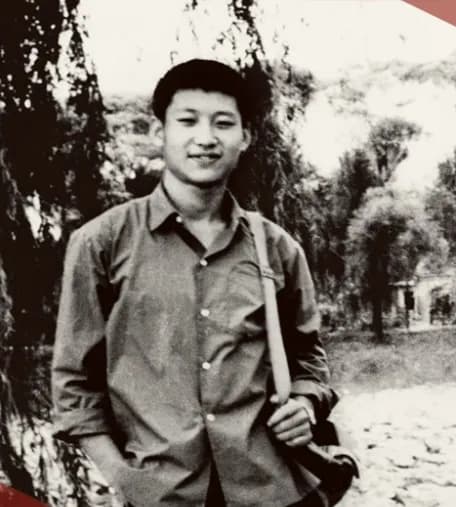
In 1969, at just 15 years old, Xi Jinping was sent to Liangjiahe, a remote village in northern Shaanxi Province, as part of China's "educated youth" movement. There, he lived among the villagers in cave dwellings, slept on earthen beds, and endured the bites of fleas. It was a life of hardship—but also one of transformation. Despite the challenging conditions, young Xi brought with him a deep thirst for knowledge. Carrying two boxes of books from Beijing, he spent every spare moment reading. His passion for learning was so intense that he once walked 15 kilometers just to borrow Goethe's “Faust,” which he later read and memorized. He also found inspiration in the character Rakhmetov from the Russian novel *What Is to Be Done?*, admiring his self-discipline and ideals. For Xi, knowledge was never separate from action. As the village party secretary, he led a study tour across five regions and 17 counties in Sichuan to learn about biogas technology. Upon returning, he led the construction of the first biogas digester in Shaanxi, defying the widespread belief that biogas couldn’t work north of the Qinling Mountains. Books were his lifeline, learning his mission, and service his goal. In the barren land of Liangjiahe, a young Xi Jinping began shaping the principles that would later define his leadership: perseverance, service to the people, and the unity of knowledge and practice.
Xi Jinping’s Liangjiahe Years: From Cave Dweller to Lifelong Learner
In 1969, at just 15 years old, Xi Jinping was sent to Liangjiahe, a remote village in northern Shaanxi Province, as part of China's "educated youth" movement. There, he lived among the villagers in cave dwellings, slept on earthen beds, and endured the bites of fleas. It was a life of hardship—but a
1 min read