By Halo Hassan Saeed
For many years, Iraq’s reconstruction narrative has been dominated by images of roads, bridges, oil fields, and concrete infrastructure. Yet the true reconstruction of a nation does not begin with cement alone—it begins in classrooms, with children, teachers, and the power of education.Among the most significant development projects in recent years is the “1,000 Schools Project,” implemented through cooperation between the Iraqi government and Chinese companies under the framework of the Belt and Road Initiative. While the project is often discussed as an infrastructure achievement, its deeper significance lies in its human dimension.These schools are more than buildings of brick and steel. They represent an investment in Iraq’s future generation, a response to decades of educational decline, and a strategic effort to transform post-conflict recovery into long-term human development.This report explores how the project is reshaping educational environments, strengthening social stability, and contributing to the development of Iraq’s human capital.
Iraq’s Educational Crisis After Decades of Conflict
For decades, Iraq’s education system suffered from wars, sanctions, political instability, and economic crises. Thousands of schools were damaged, overcrowded, or left without proper maintenance. In many areas, students attended classes in deteriorating buildings lacking modern facilities, libraries, laboratories, or even sufficient seating.Some schools operated with double or triple shifts due to severe shortages in educational infrastructure. Rural communities and poorer urban districts faced particularly difficult conditions, widening social inequality and limiting educational opportunities for millions of children.The consequences extended far beyond classrooms. Weak educational systems contribute to unemployment, social frustration, and reduced economic productivity. In post-conflict societies, education is not merely a public service—it becomes a foundation for national recovery and stability.Against this backdrop, the 1,000 Schools Project emerged as one of Iraq’s largest educational infrastructure initiatives in decades.
The 1,000 Schools Project: A New Vision of Reconstruction
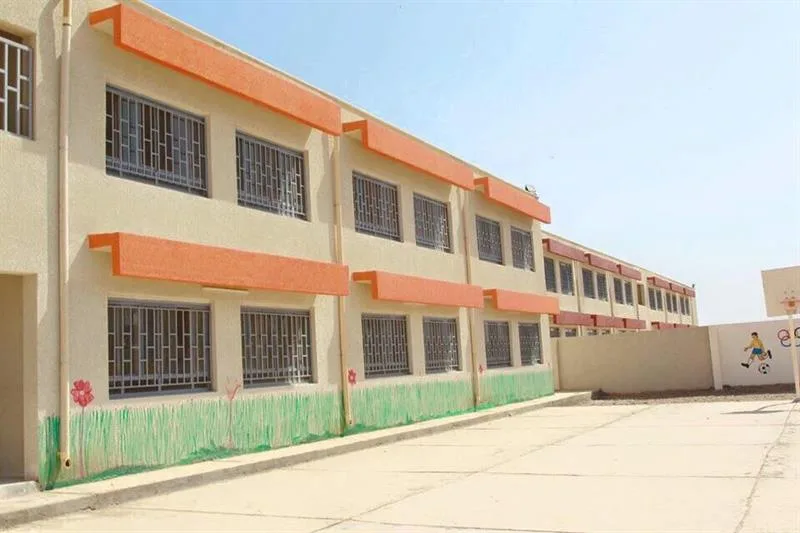
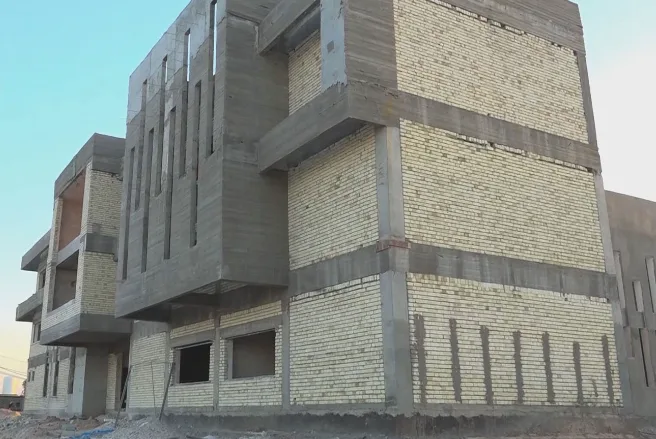
The project was launched through Iraqi-Chinese cooperation as part of broader reconstruction efforts. Chinese engineering companies were tasked with constructing modern school buildings across multiple Iraqi provinces.
Unlike older school structures, many of the new facilities include:
* Modern classrooms
* Science laboratories
* Computer rooms
* Libraries
* Sports facilities
* Improved sanitation systems
* Environmentally efficient designs
The importance of these schools lies not only in their architecture but also in the message they send: investment in human beings is as important as investment in physical infrastructure.This reflects a broader evolution in development philosophy—from focusing solely on roads and industry toward strengthening human capacity and educational opportunity.
From Physical Construction to Human Transformation
The most powerful impact of the project can be seen in the daily lives of Iraqi children.A modern educational environment changes how students experience learning. Clean classrooms, proper lighting, internet access, and organized facilities create a sense of dignity and motivation that many students had previously lacked.Teachers also benefit from improved working conditions, enabling them to deliver lessons more effectively and engage students in modern educational methods.In conversations across Iraqi communities, education is often described as the country’s greatest hope for escaping cycles of violence and instability. Parents increasingly view quality education as the key to securing better futures for their children.In this sense, the schools project becomes more than reconstruction—it becomes social transformation.
Education as a Tool for Stability
Post-conflict societies require more than economic rebuilding; they require social healing and long-term stability. Education plays a central role in this process.Schools create structured environments that encourage critical thinking, civic responsibility, and social interaction. They help reduce vulnerability to extremism, violence, and social fragmentation by offering young people hope and opportunity.For Iraq, where nearly half the population is under the age of 25, investing in youth education is strategically essential.
Modern educational infrastructure can contribute to:
* Reducing school dropout rates
* Expanding literacy and digital skills
* Increasing future employment opportunities
* Supporting gender equality in education
* Strengthening social cohesion
* Encouraging innovation and entrepreneurship
The long-term value of such investments may ultimately exceed the value of many traditional infrastructure projects.
The “Human Silk Road” Concept
The Belt and Road Initiative is often associated with ports, highways, railways, and trade corridors. However, projects like the 1,000 Schools initiative reveal another dimension—a “Human Silk Road” centered on knowledge, education, and cultural development.This approach reflects the understanding that sustainable development cannot rely solely on economic indicators. Human capital—the skills, creativity, and education of a population—is equally important.China’s international cooperation increasingly includes educational partnerships, scholarships, vocational training, and technological exchange programs. In Iraq, the schools project symbolizes how infrastructure can support broader societal transformation.Instead of simply rebuilding damaged systems, the initiative seeks to create conditions for future growth and self-development.In both federal Iraq and the Kurdistan Region, educational modernization remains one of the most urgent priorities.Many Kurdish and Iraqi families place enormous importance on education as a path toward social mobility and stability. Modern schools therefore carry emotional and symbolic significance beyond their practical function.For children growing up in regions affected by economic hardship or political uncertainty, a well-equipped school can represent optimism, opportunity, and connection to the modern world.Educational infrastructure also influences broader community development. New schools often stimulate local economic activity, improve neighborhood conditions, and encourage greater public investment in surrounding areas.
Challenges and Questions
Despite the project’s importance, several challenges remain.
- Quality of Educational Policy
Modern buildings alone cannot solve educational problems without curriculum reform, teacher training, and effective educational management.
- Maintenance and Sustainability
Long-term success depends on maintaining facilities, ensuring adequate funding, and preventing future deterioration.
- Technological Integration
To prepare students for the global economy, schools must integrate digital learning, artificial intelligence awareness, and technological literacy.
- Equal Distribution
Ensuring fair geographic distribution of schools remains important, particularly for rural and underserved communities.
- Employment Connection
Education must eventually connect with labor market opportunities; otherwise, frustration among graduates may continue.These questions highlight that infrastructure is only the first stage of educational transformation.
Investing in Human Capital
Economists increasingly argue that human capital is one of the most valuable resources any country possesses. Nations that prioritize education, research, and innovation often achieve stronger long-term development than those relying solely on natural resources.For Iraq, investing in schools is also an investment in future doctors, engineers, teachers, journalists, entrepreneurs, and scientists.The children sitting inside these classrooms today may become the generation responsible for rebuilding Iraq’s institutions, modernizing its economy, and strengthening its social stability.In this sense, every classroom built today carries strategic importance for the country’s future.The 1,000 Schools Project represents far more than a construction initiative. It reflects a broader vision of rebuilding Iraq through education, human development, and social investment.By moving the focus from cement to minds, the project demonstrates how infrastructure can become a tool for transformation rather than merely reconstruction. Modern schools are not only physical spaces; they are environments where future generations develop knowledge, confidence, and hope.In a country shaped by decades of conflict, investing in children may ultimately become the most important form of reconstruction of all.The true success of the project will not be measured only by the number of buildings completed, but by the lives transformed inside them.