Halwest Hassan
ERBIL, Iraq— The old bazaar of Erbil — one of the oldest continuously inhabited cities on earth — has always been a crossroads. Spices from India, silk from China, and copper from Anatolia once changed hands beneath its vaulted roofs. Today, the bazaar sells Chinese-made smartphones alongside Kurdish dried figs, and a fibre-optic cable funded partly through Belt and Road-linked investment runs beneath the street outside. The ancient Silk Road, it turns out, never truly ended. It simply changed form.
Iraq signed a framework agreement with China under the Belt and Road Initiative (BRI) in 2019, part of a landmark oil-for-reconstruction deal that promised to channel Chinese investment into a country still rebuilding from decades of conflict. But the story of the BRI in Iraq — and specifically in the Kurdistan Region — is not simply a story of infrastructure. It is a story about economic survival, cultural exchange, employment, and the quiet revolution of digital connectivity reaching communities that war had long left behind.
This correspondent spent three months reporting from Erbil, Sulaymaniyah, Dohuk, and Baghdad, speaking with economists, engineers, textile workers, university students, government officials, and ordinary citizens. What emerged was a portrait far more complex, and far more human, than the geopolitical headlines suggest.
I. Economic Revival: Oil, Reconstruction, and the Infrastructure Gamble
Iraq's 2019 framework agreement with China — often called the "oil-for-reconstruction" deal — was born of necessity. With oil revenues decimated by falling prices and a state treasury drained by years of war against ISIS, Baghdad needed partners willing to invest without the conditionality attached to Western loans. China, through BRI mechanisms, offered both capital and construction capacity.
The most visible results so far are in central and southern Iraq: highways, power plants, and port upgrades at Umm Qasr. But in the Kurdistan Region, the picture is more nuanced. Chinese companies have participated in oil extraction partnerships in Kirkuk-adjacent fields, while BRI-linked logistics investment has improved the Erbil-Baghdad freight corridor — reducing transport times that once cost Kurdish exporters dearly.
"Before, sending goods from Erbil to Basra could take four days because of road conditions and checkpoints," said Karwan Mahmoud, a wholesale trader who ships dried fruit and construction materials.
"Now it is sometimes two days. For perishables, that is the difference between profit and loss."
Not everyone shares his optimism. Critics — including several economists at the American University of Iraq, Sulaimani — argue that the oil-for-reconstruction model risks locking Iraq into debt-in-kind arrangements that prioritise Chinese contractors over local ones, limiting technology transfer and employment generation.
"The contracts often come with Chinese labour, Chinese materials, and Chinese management," said Dr. Saman Fattah, an economist who has studied BRI projects across the Middle East.
"That is not development. That is outsourcing reconstruction to a foreign country that happens to pay itself in crude oil."
The Iraqi government disputes this characterisation, pointing to provisions requiring local subcontracting. The reality, as with most large-scale infrastructure programmes, lies somewhere between the two positions — and is still unfolding.
II. Employment: Who Is Actually Working?
Across the BRI countries studied by international researchers, the initiative has been credited with creating an estimated 420,000 jobs. In Iraq, the numbers are harder to verify — but the human stories are not.
In Sulaymaniyah, a Chinese-funded industrial zone project on the city's southern outskirts has generated work for several hundred Kurdish labourers and technicians since breaking ground in 2023. The project, part of a bilateral framework negotiated through BRI channels, involves a Chinese construction firm partnering with a Kurdish private developer.
"I trained for six weeks alongside Chinese engineers," said Sardar Ali, 28, a civil engineering graduate who had been unemployed for two years before joining the project.
"I learned things the university never taught me. I am not saying everything is perfect. But I have work, and I have skills now."
The gender dimension deserves attention. In Erbil's emerging e-commerce sector — linked in part to digital Silk Road infrastructure — a growing number of Kurdish women are running small online businesses, selling handmade crafts and food products to buyers in the Gulf, Turkey, and increasingly, China. A women's cooperative in the Ankawa district reported that digital trade had allowed twelve of its members to become their household's primary income earner for the first time.
Yet youth unemployment in Iraqi Kurdistan remains stubbornly high — officially around 20%, with some estimates considerably higher. BRI-linked projects, while real, have not yet reached the scale needed to absorb the thousands of graduates entering the job market each year. The question is not whether the BRI creates jobs; it clearly does. The question is whether it creates enough of them, and whether those jobs build lasting local capacity.
III. Culture and Tourism: The Silk Road as Shared Memory
Of all the BRI's dimensions, culture is the least discussed and perhaps the most quietly powerful. The original Silk Road was not merely a trade route — it was a corridor of ideas, religions, languages, and art. The modern Belt and Road Initiative has sought to revive this dimension through people-to-people exchanges, tourism cooperation, and cultural programming.
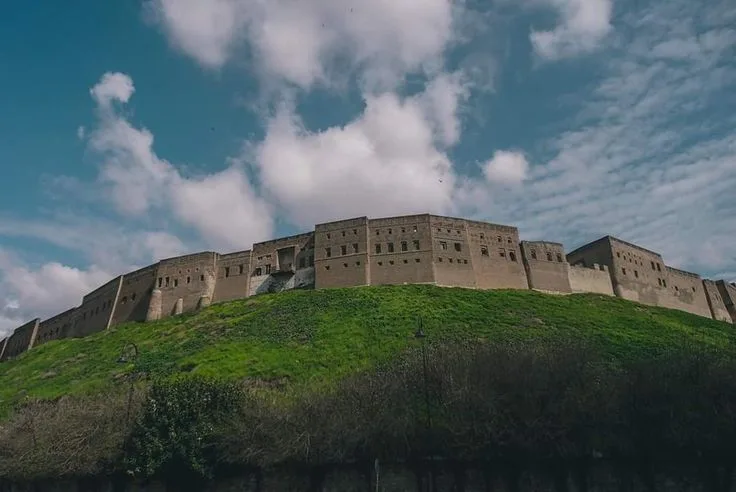
For Iraqi Kurdistan, the cultural dimension of the BRI resonates with particular force. The region's history — as a crossroads of Mesopotamian, Persian, Arab, and Kurdish civilisations — makes it a natural node in any genuinely inclusive Silk Road narrative. Erbil's ancient citadel, a UNESCO World Heritage Site, has attracted growing numbers of Chinese tourists since 2022, part of a trend driven by improved air links and Chinese social media coverage of Iraq's archaeological riches.
"Chinese tourists come here and they are astonished," said Avin Rashid, a guide at the Erbil Citadel who learned Mandarin through an online platform.
"They did not know that civilisation this old existed outside China. And we did not know how much we have in common. We both built walls. We both had silk. We both drank tea."
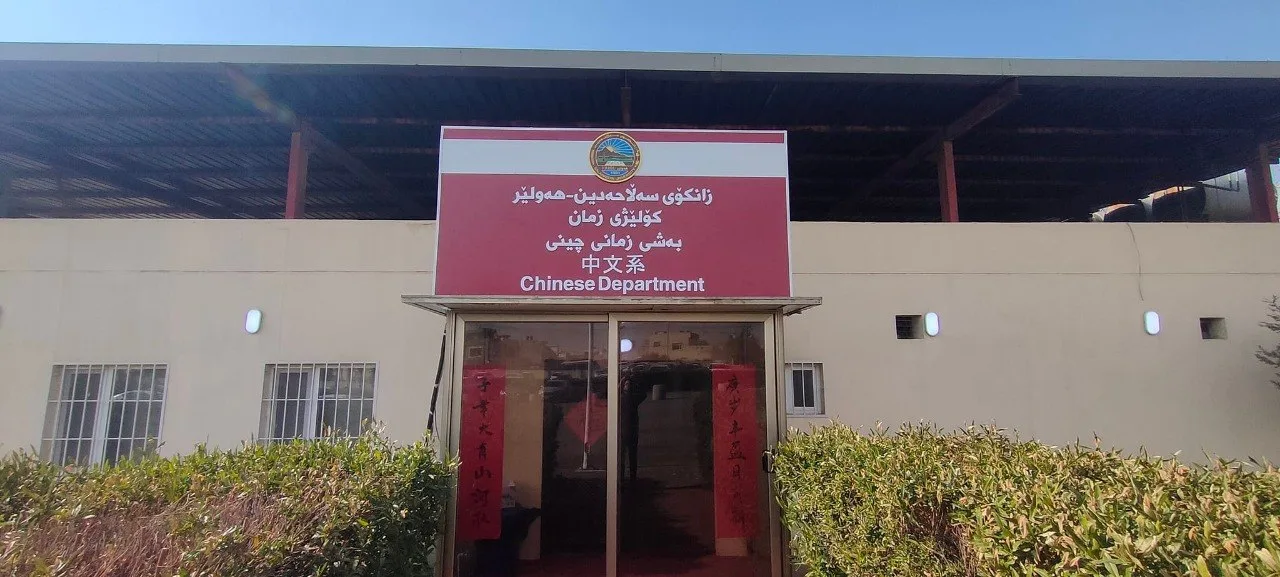
At the University of Sulaymaniyah, a Confucius Institute established in 2021 now enrols over 300 students in Mandarin classes. Several have won scholarships to study in Chinese universities — a modest but meaningful form of the educational exchange that European scholars like Viviane Reding have long advocated as the foundation of durable international partnership.
The cultural exchanges are not without friction. Some Kurdish intellectuals express concern that BRI cultural programming, like its economic programming, tends to flow predominantly in one direction — projecting Chinese soft power outward rather than genuinely absorbing the cultures of partner countries. These are legitimate concerns, and ones that proponents of the initiative would do well to take seriously.
IV. Technology and Internet: Connectivity as Development
Perhaps the most transformative — and least visible — dimension of the BRI in Iraqi Kurdistan is the Digital Silk Road. In a region where electricity supply remains intermittent and infrastructure gaps are acute, the expansion of digital connectivity has had effects that outpace almost any physical construction project.
Since 2022, BRI-linked investment has contributed to the expansion of fibre-optic backbone infrastructure in northern Iraq, improving bandwidth availability in Erbil and Duhok and reaching several smaller towns that previously depended on satellite connections. The effects have cascaded across sectors: telemedicine consultations that connect remote Kurdish villages to specialists in Erbil; online education platforms that allow students in conflict-affected areas to continue their studies; digital payment systems that have brought small traders into the formal economy for the first time.
"Before the fibre line reached our village, I had to drive 45 minutes to use the internet properly," said Shirin Karim, a schoolteacher in a small town east of Dohuk.
"Now my students submit their homework online. Last month, one of them joined a science competition in Seoul. He did not leave his bedroom."
Chinese technology companies — particularly in telecommunications and e-commerce infrastructure — have been among the most active BRI participants in the digital domain. Huawei has equipment deployed in Iraqi telecommunications networks, and Alibaba's logistics frameworks have influenced how Kurdish online retailers reach regional markets.
Western governments have raised concerns about the security implications of Chinese telecommunications infrastructure, and those concerns deserve serious engagement rather than dismissal. At the same time, for communities that have spent decades at the margins of global connectivity, the question of who built the infrastructure is secondary to the fact of its existence. Pragmatism, here as elsewhere in the BRI story, tends to outrun ideology.
V. What the New Silk Road Means for Iraq
The Belt and Road Initiative in Iraq is neither the salvation its most enthusiastic proponents claim, nor the neo-colonial threat its most alarmed critics fear. It is something more ordinary, more complicated, and ultimately more interesting: a large-scale experiment in international partnership, playing out in a country with extraordinary needs, extraordinary history, and an extraordinary capacity for resilience.
The Kurdish trader who now ships his goods in half the time, the engineering graduate who learned a skill he could not find locally, the schoolteacher whose student competed internationally without leaving his village, the citadel guide who learned Mandarin — none of them fits the geopolitical narrative that dominates coverage of the BRI. But all of them are the BRI, as it actually exists on the ground.
"We have survived empires, invasions, and abandonment," said Dr. Nazanin Osman, a historian at the University of Dohuk, when asked what she thought the BRI meant for Kurdistan.
"We know how to take what is useful from whoever passes through and make it our own. The Silk Road is not new to us. We have always been on it."
The ancient route, it turns out, still runs through Erbil. The question — as it has always been — is what the people along it choose to carry.
Reporting note: This report is based on three months of field reporting conducted between December 2025 and February 2026 in Erbil, Sulaymaniyah, Dohuk,.